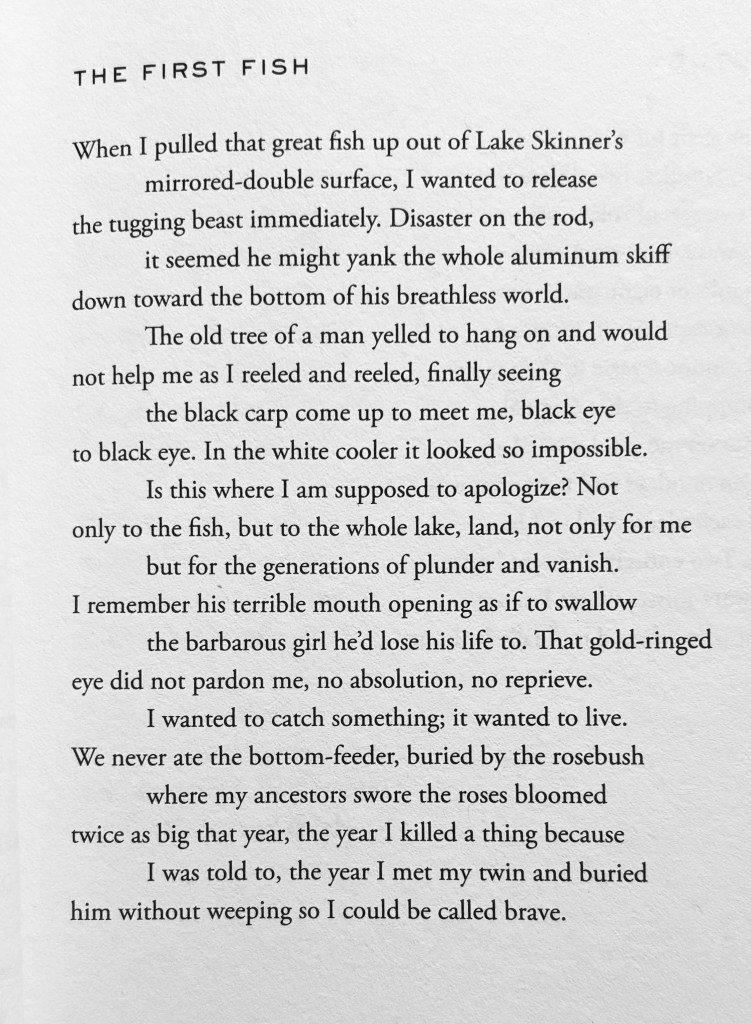
This poem is somewhat hard for me to decipher. I have somewhat of an inkling towards this poem and it’s message, but it is still unclear to me. I can see the smaller picture, but the bigger one is blurry. There are some lines that I comprehend, but the whole theme is confusing to me, and there are some outlier lines that I can’t interpret with the poem.
Firstly, what I noticed about this poem is that it is about fishing. Really, a young kid feeling the nervousness of fishing. It’s indicated at the beginning of the poem with “I wanted to release the tugging beast immediately.” It shows the lack of knowledge about fishing, as well as the nervousness of fishing. I also noticed this aspect with the line “Is this where I am supposed to apologize?” showing a child’s inexperience fishing, as well as the fact that kids have more sympathy. It’s also obvious from this poem that the speaker believes fishing, and fish themselves are gross. It’s evident with the line “his terrible mouth” showing the disgust a child holds. This poem also has a line indicating the speaker was “forced” to fish. “I killed a thing because I was told to” shows this idea of the speaker being forced into an activity they weren’t comfortable with.
Second, I wasn’t quite sure about some lines in the poem. One line that I am particularly perturbed by is the line that reads “the year I met my twin and buried him without weeping so I could be called brave.” I think this correlates with the speaker being brave when a fish died, so they’re being brave at a funeral as well. Showing that the speaker is strong overall. But, it’s so unclear why this is important. I’m also confused by the line “buried by the rosebush where my ancestors swore the roses bloomed twice as big that year.” Is this supposed to correlate with death, and show that there is life opposing it? Or, is this showing the environmental impacts of harvesting the environment? These two lines greatly confused me, and it mulls my interpretation of the poem.
Third, after some pondering, there are parts of the poem that I do understand, aside from the obvious fishing part: guilt. This speaker is going through guilt and using the fish as a metaphor. The line “… the barbarous girl he’d lose his life to” brings together this idea of violence, and the speaker feeling intense empathy for the fish they caught. The line “Is this where I am supposed to apologize?” also brings up the guilt the speaker is feeling, with them wanting to apologize to a fish they caught. This speaker also seems guilty towards the end with “… the year I killed a thing because I was told to” which shows this idea that the speaker is grappling with the death of killing the fish, and much more.
Overall, I think this poem can have several meanings. Colonialism seems to be a big theme with this poem, almost using the fish as an objective to show the pillaging that colonizers did, like when they killed buffalo for sport and the Indigenous starved. Especially with the line “generations of plunder and vanish” it brings ideas of colonialism. Another theme that I believe is prevalent in this poem is environmentalism. The fish could be seen as a motif for the unnecessary sport hunting that exists, which goes with the colonialism. The line “We never ate the bottom-feeder” shows this idea of sport hunting and wasting food and life. There also seems to be themes of guilt and bravery, in the wake of death. The line at the very end “… buried him without weeping so I could be called brave” shows this idea of the speaker wanting to be brave, even in the face of death. But, it also seems to be an allegory for abuse, almost the speaker forcing themselves not to feel sadness, like the way they were forced to fish. Overall, this poem has so many confusing meanings wrapped into one another, it’s hard to decipher.
Word Count: 696
Bibliography
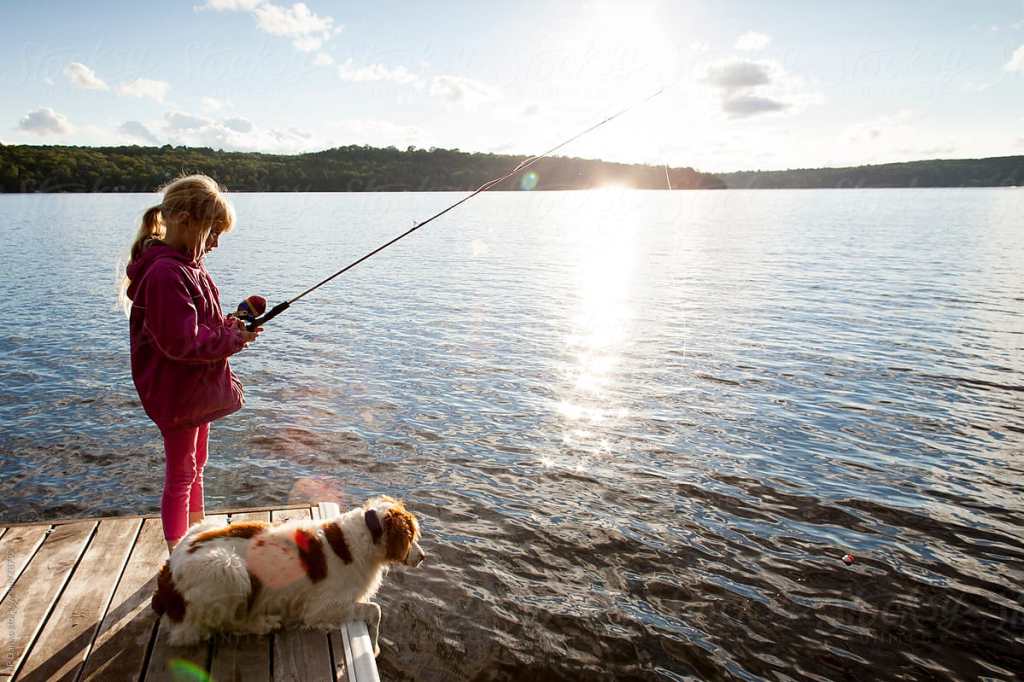
Danko, JP. “Little Girl Fishing From Dock On Cottage Lake With Dog.” n.d. <https://www.stocksy.com/photo/78792/little-girl-fishing-from-dock-on-cottage-lake-with-dog>.
Limon, Ada. “The First Fish.” The Hurting Kind. Milkweed Editions, 2022. 39.
 Poetry: Works and Analysis
Leave a comment